Flicco Manager
Found a football club on the village green. Build it into a top-flight club.
Pick the tactics, scout the players, bring through your own kids and build a club round them. When the big chances come, you play them yourself.
In your browser now, for our beta testers. iPhone and Steam to follow.
The whole job
Everything a manager does, and the match too
A proper management game underneath, friendly enough to play on a phone on the bus.
Tactics
Three shapes, five styles, and eight team instructions under them: mentality, pressing, the line, width, passing, tempo and more.
Scouting
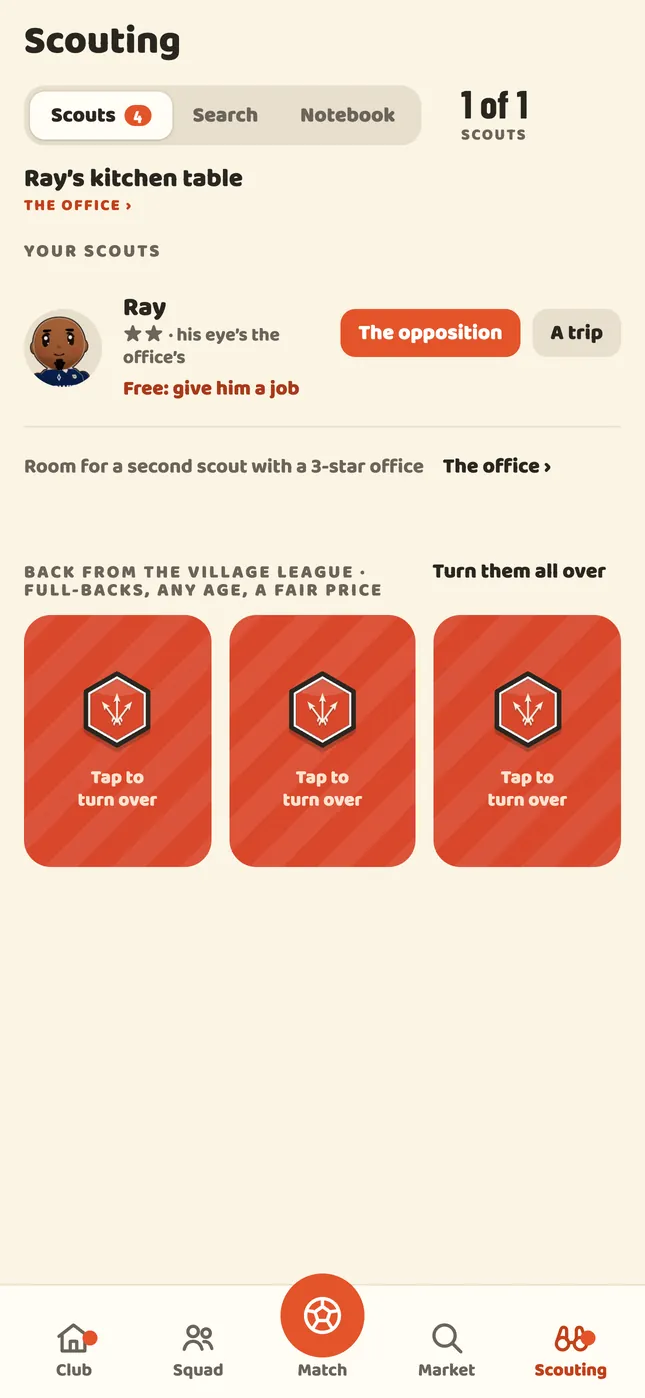
Scouts on your staff, sent where you need them, and a search across every player they’ve seen.
Youth
An academy, a youth team and a youth day every summer. Grow your own, and sell them on or keep them.
The club
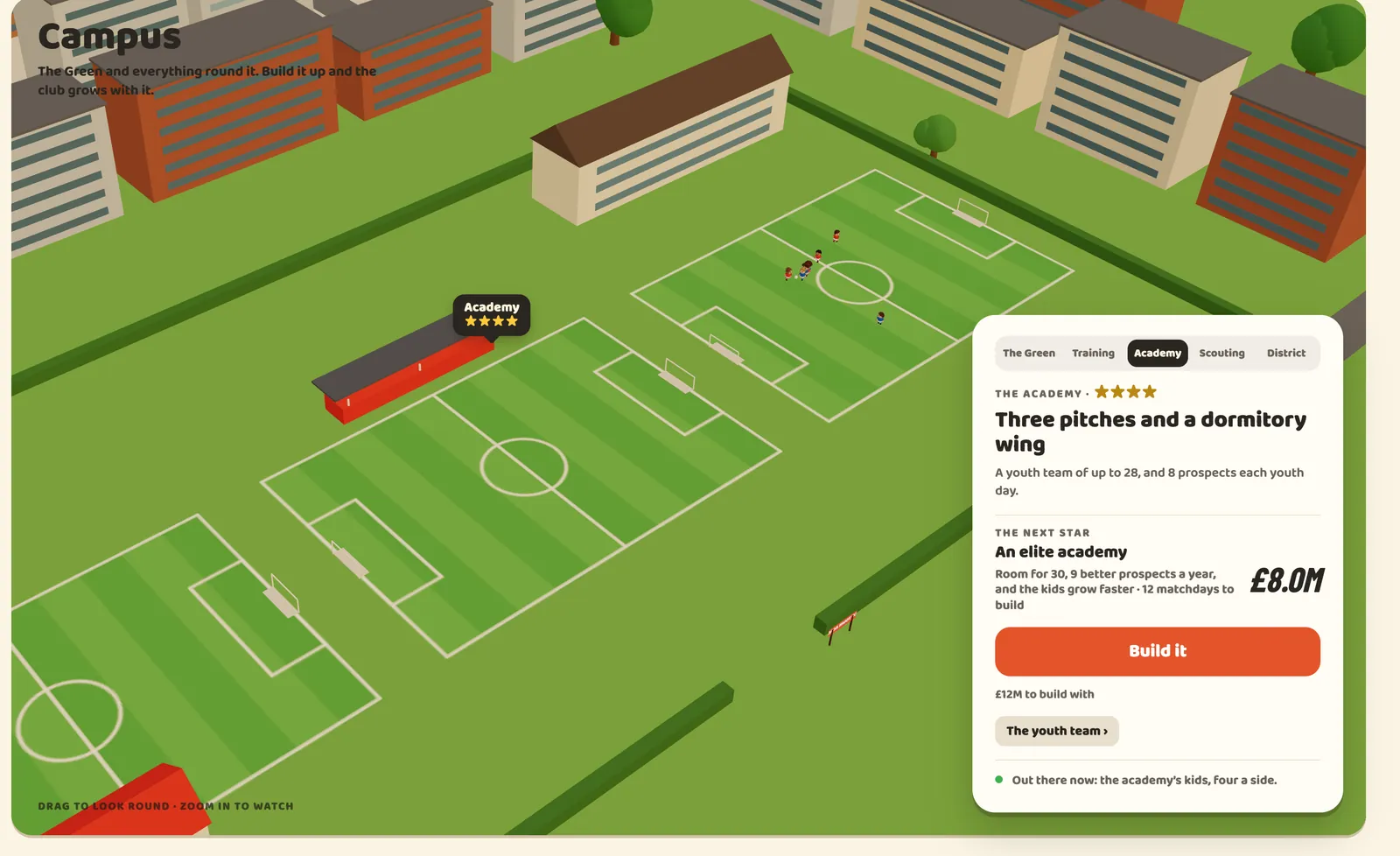
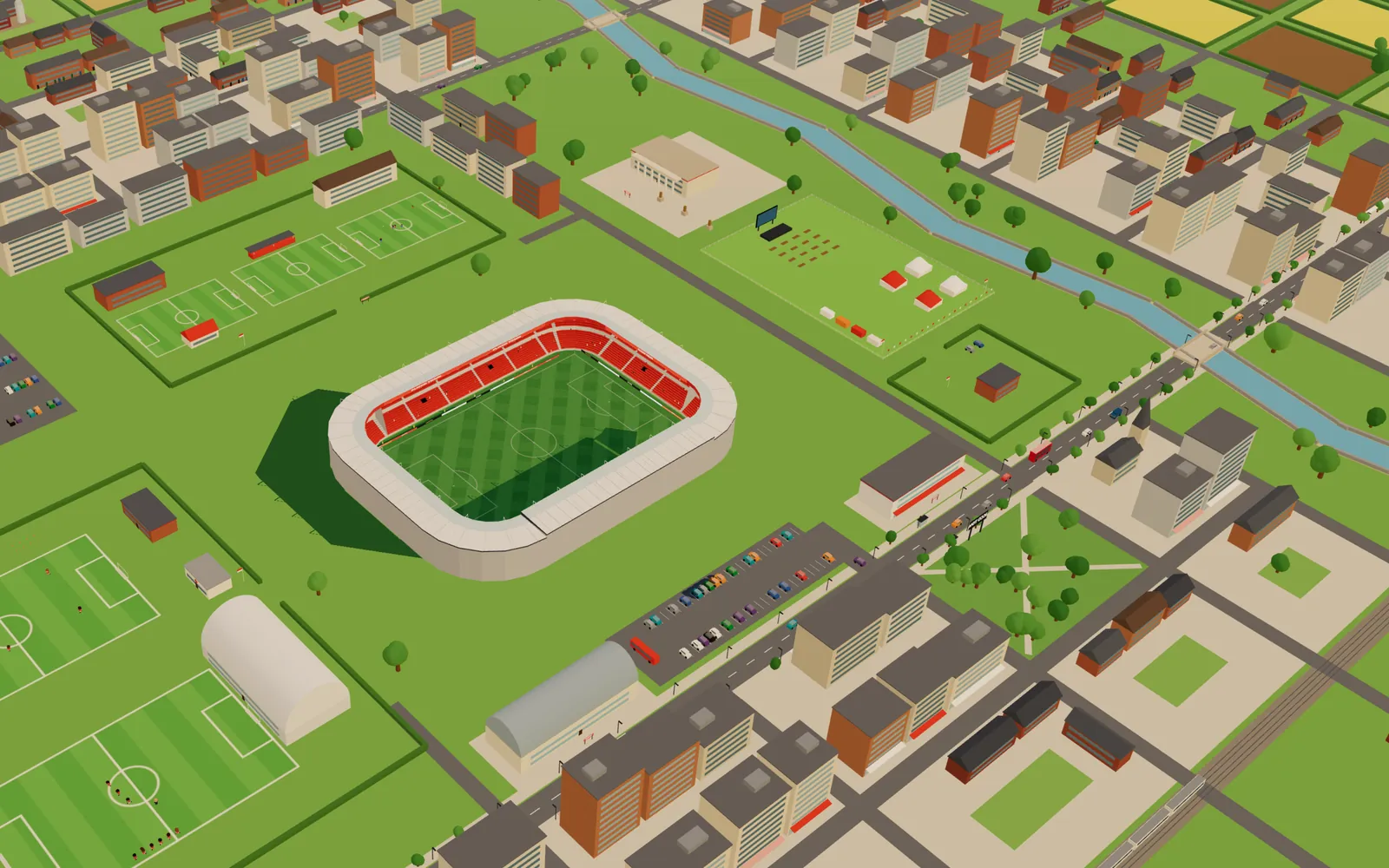
Ground, training ground, academy and scouting office, built up as the club grows, and a town growing round it.
Matchday
Watch it, manage it, then play the big moments yourself
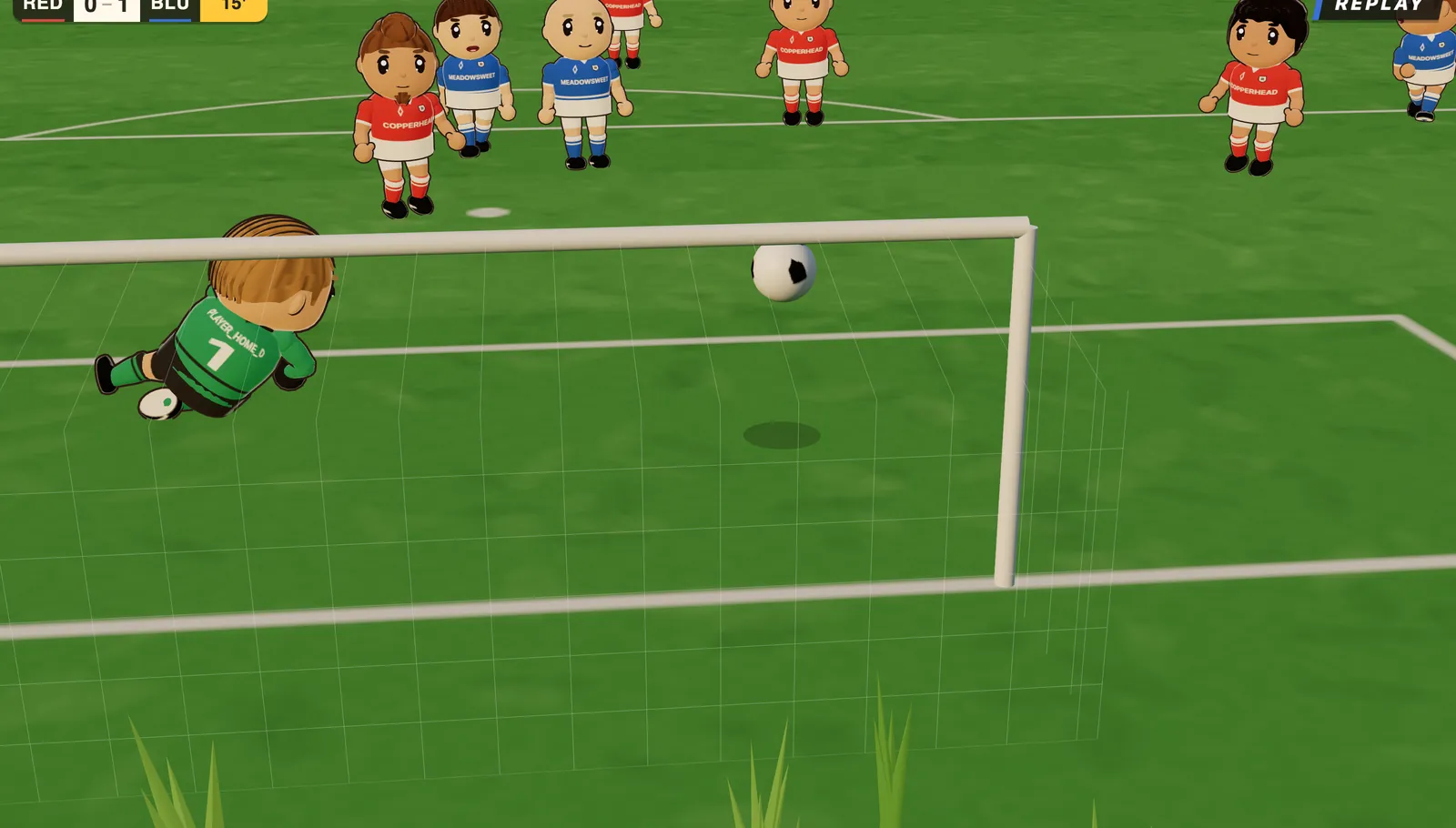
Every match is played out on the pitch, the highlights as they happen, with a team talk at half-time. Change the shape, the instructions or the players while it’s on.
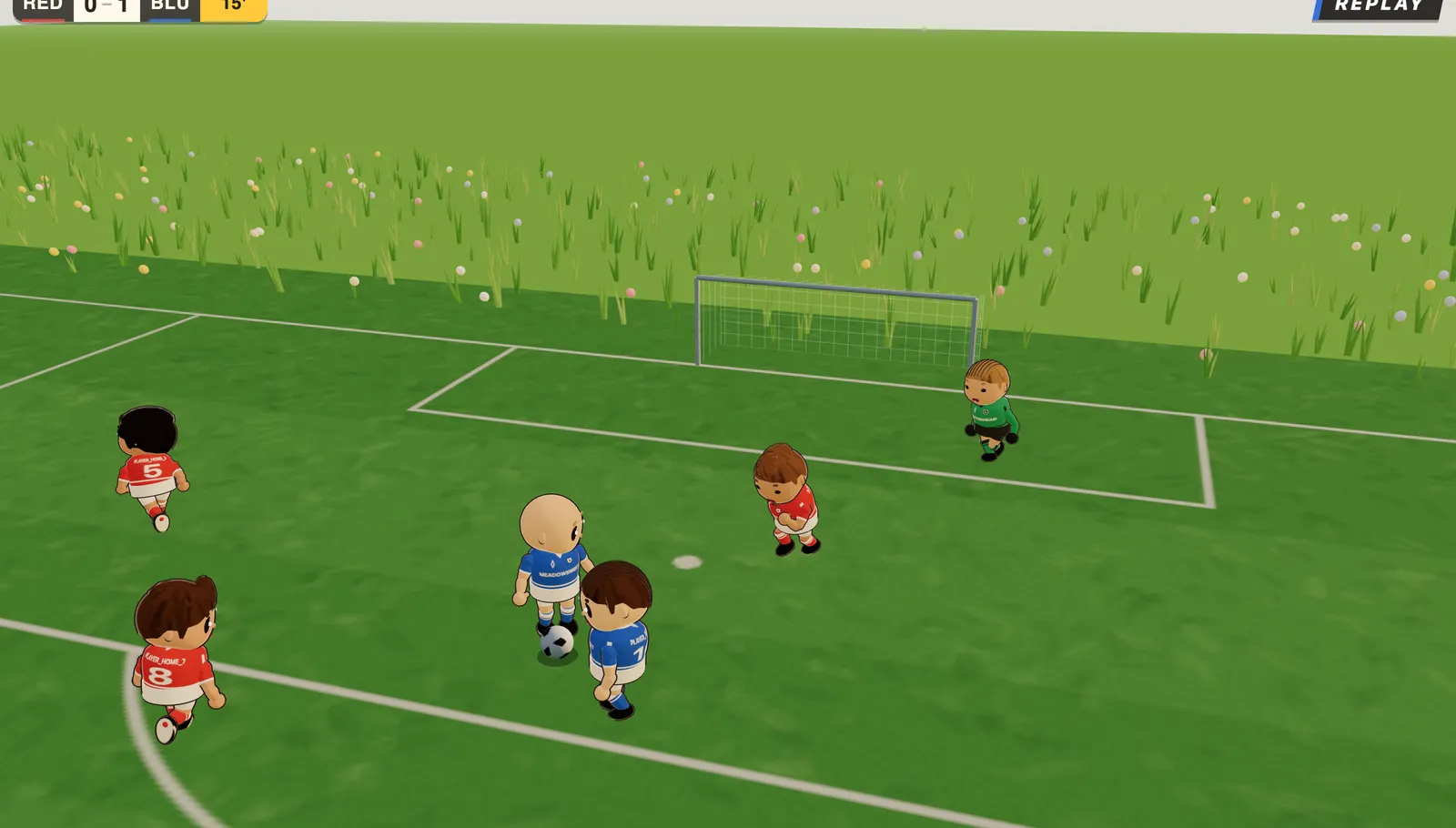
When your side makes a real chance, the match stops for you. Play it from the build-up to the finish with one finger: draw the pass, bend the shot, beat the keeper. What you do is what the match counts. Or sim it, and read the report.
Tactics
Your shape, your style, your say
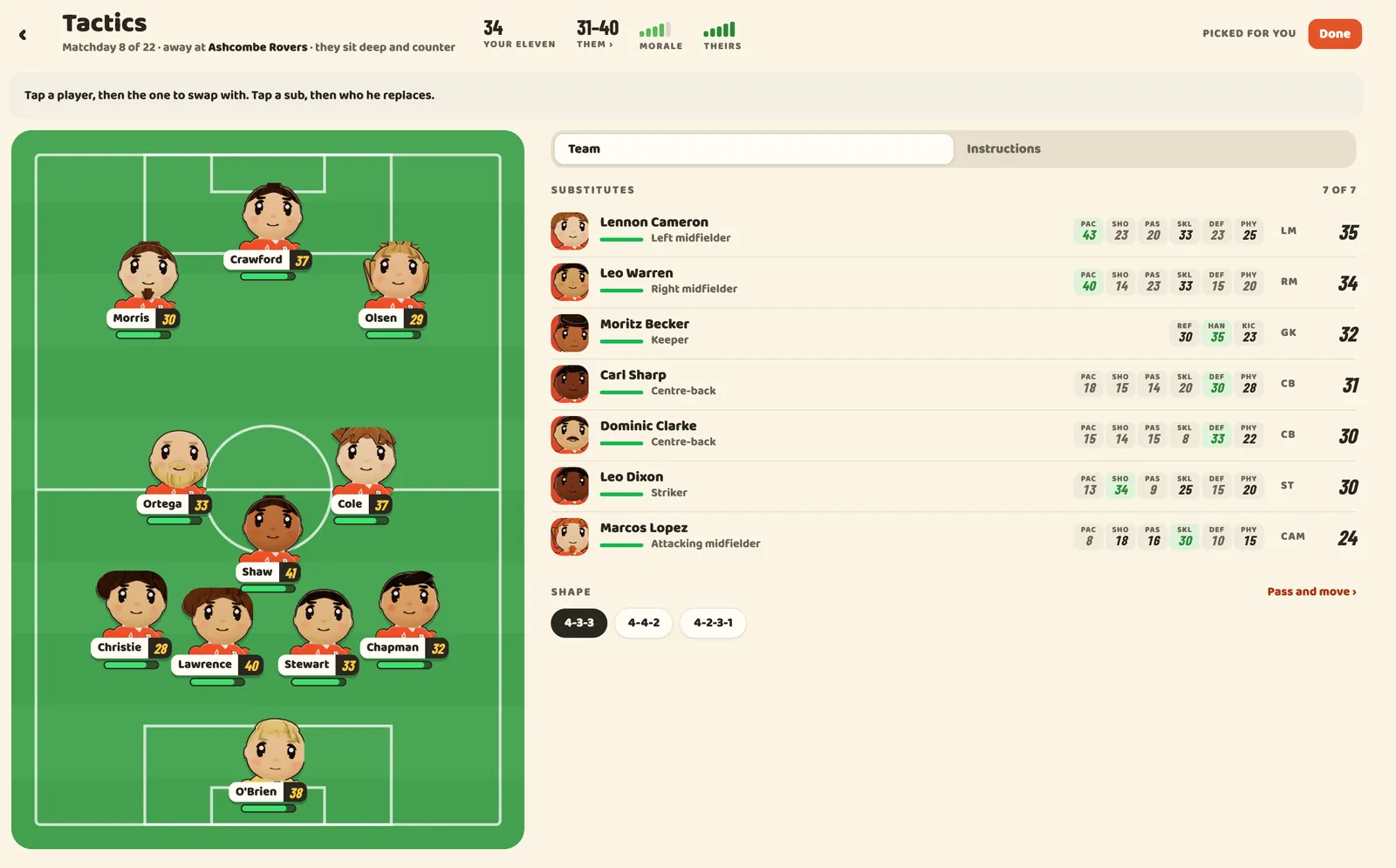
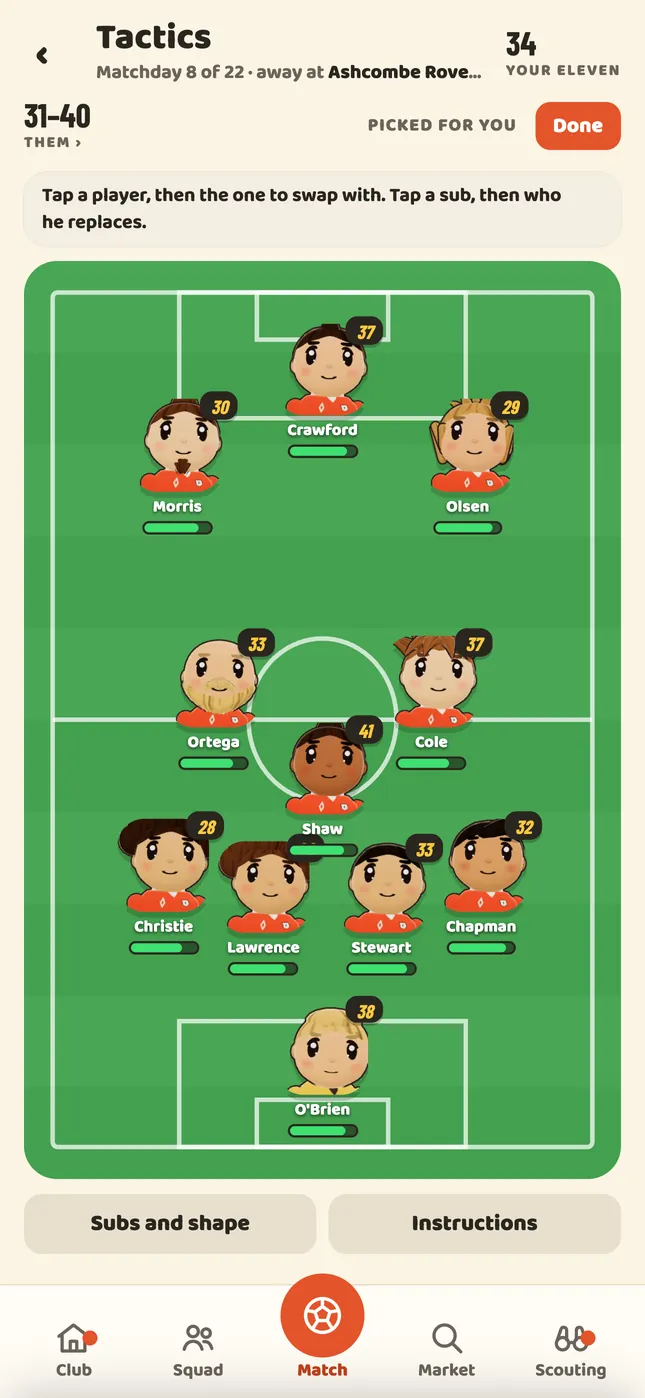
Pick your eleven on the board and see each player’s rating where he’s playing, and what he’s got left in his legs. Choose 4-3-3, 4-4-2 or 4-2-3-1, a style (pass and move, counter-attack, high press, down the wings, or park the bus), then move any of its eight instructions a step or two: how attacking you are, how hard and how high you press, the defensive line, the width, how you pass and the tempo.
Your scout reports on the next opponent, so you know whether they’ll sit deep or come at you.
Scouting and the market
Find them before anyone else does
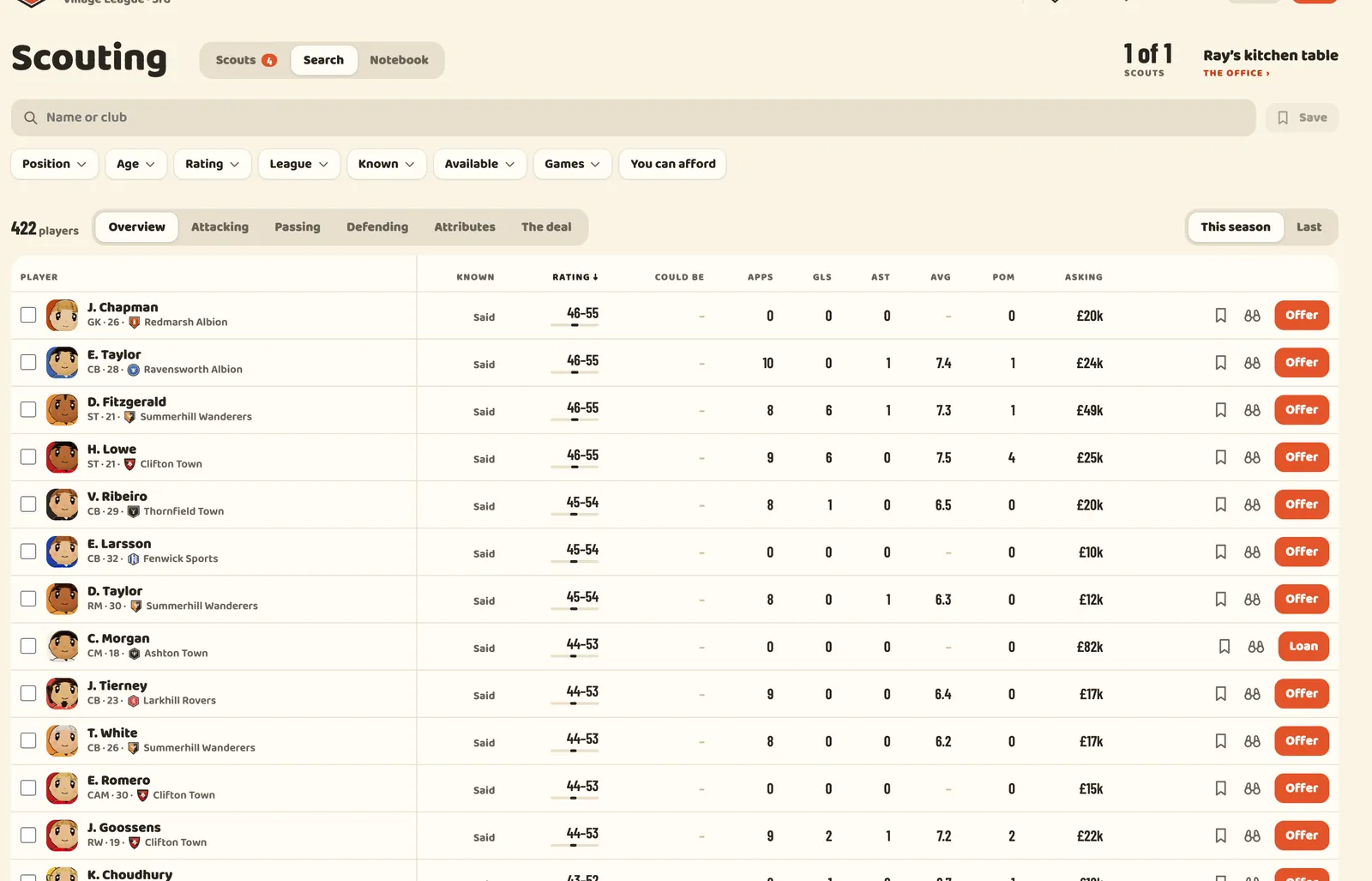
Your scouts are staff: hire them, set one on the next opponent, send another on a trip for a full-back under 23 you can afford. Their finds come back as cards to turn over.
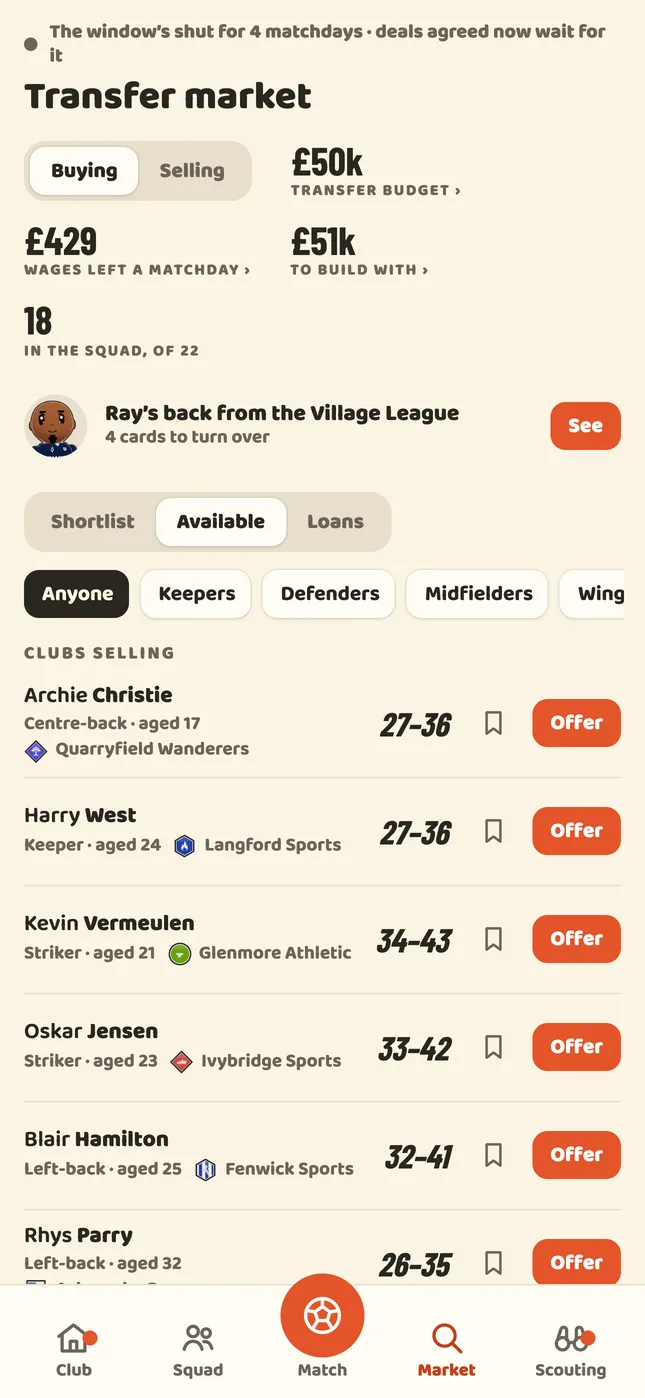
Every player you know of is in one search. Filter by position, age, rating, league or what you can afford, compare two or three side by side, and the better your scouts know a player, the sharper his numbers. Then haggle: the fee with his club, then his wages and years with him. Loans too, and offers for your own players when bigger clubs come calling.
Youth and training
Grow your own
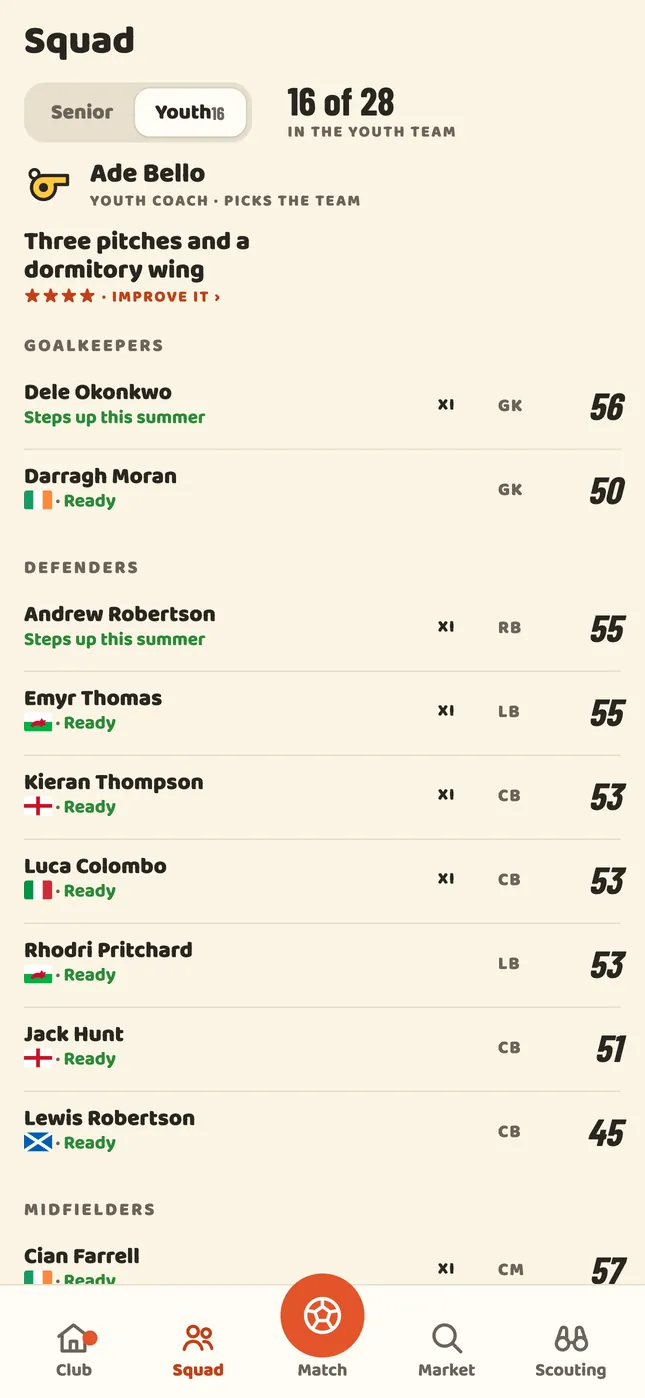
Every summer is youth day: the academy’s new class, turned over one at a time, each with the coaches’ read on what he could become. Any academy can turn up a gem. Keep the ones you believe in; your youth coach picks their team and tells you how they’re coming on, and at 19 they step up.
Each week you choose what the squad works on (shooting, passing, defending, fitness, set pieces or rest), and pick up to three players to grow twice as fast.
The club grows
Season one, and years later
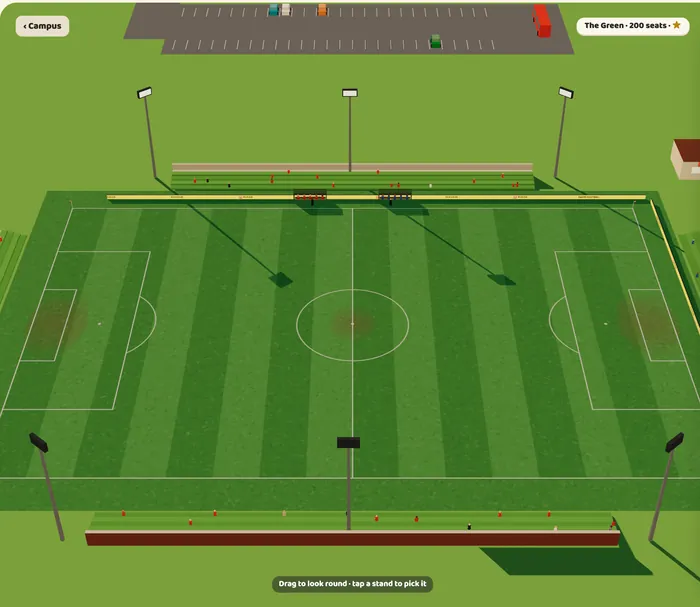
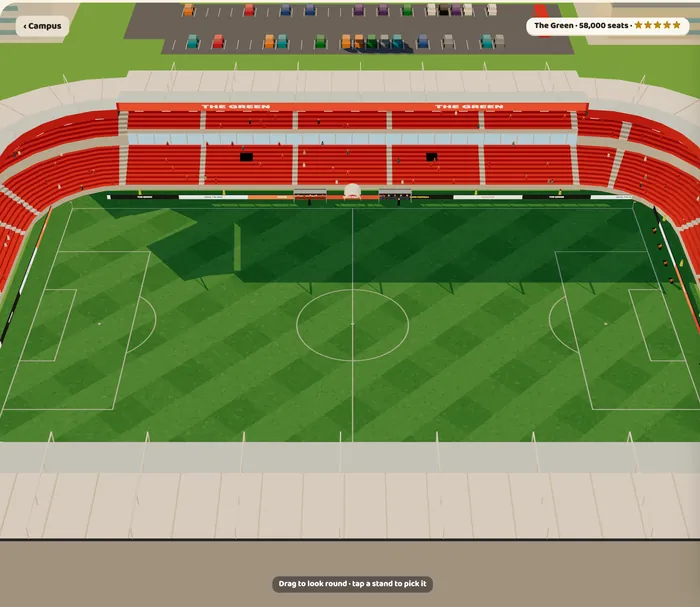
You start with a grass bank, 200 seats and a few dozen fans. As the club climbs, you build: the ground stand by stand, the training ground, the academy and the scouting office star by star, then a matchday district of food halls, a club shop, a fan park and a museum. And the town grows round your club. Drag to see.

The ground
Benches, then a stand, then a second tier, roofs, corners and boxes. Each side shuts while it’s built, so you choose when. Or build a new stadium elsewhere and move in when it’s done.
The campus
A better training ground trains them faster; a bigger academy has room for more kids and reads them better; a bigger scouting office takes more scouts.
The money
Crowds, sponsors and the matchday district pay for it all. Budgets for wages, transfers and building, and a board with a target for every season.
The climb
Six divisions, from the Village League up
The Village League, the County League, League Two, League One, the Championship and the top flight. Each step up brings a bigger crowd, a tougher league, and a board that wants more. Your club keeps its history as it goes: its records, its milestones and a team photo every season.
And it’s yours from the first day: your name, your colours, and a crest you make yourself.
Fair to play
Free to start. Nothing to buy that wins a match.
No energy that runs out, no waiting to play your next match, no subscription. Your club gets better because you run it well.
The waitlist
Get your club in early
Flicco Manager is in beta now. Leave your email and we’ll send you a way in as places open up, and tell you when it comes to iPhone and Steam.